

Ceramic Coating vs PPF
Protecting your car, bike, or boat’s paint comes down to two main options: ceramic coating and paint protection film (PPF). Both are proven solutions that deliver real results, but each of them works differently and offers distinct advantages. So how do you know which one is right for you, what makes them different, and does one offer better value than the other? This guide covers everything you need to make an informed decision about the best paint protection for your specific needs.
What Is Ceramic Coating?
Ceramic coating is a liquid polymer that chemically bonds with your car’s paint to form a durable protective layer. Unlike wax or teflon coating that sits on the surface and wears off within weeks, a ceramic coat becomes semi-permanent, lasting years with proper care.
How It Works
The coating bonds directly to your clear coat at the molecular level, creating a hydrophobic layer that repels water and contaminants. Water beads up and rolls off, carrying dirt with it. This makes washing faster and less frequent.
What It Protects Against
- UV rays – Prevents oxidation and fading from sun exposure
- Bird droppings and tree sap – Acts as a sacrificial layer against corrosive contaminants
- Light scratches and swirl marks – Provides scratch resistance during regular washing
- Environmental damage – Shields paint from acid rain, pollution, and road grime
How Long It Lasts
Longevity depends on product quality and application. Gtechniq’s Crystal Serum Light carries a 5-year guarantee when applied by an accredited detailer. Crystal Serum Ultra extends that to 9 years, far beyond what traditional sealants offer.
What Is Paint Protection Film (PPF)?
Paint protection film, also known as clear bra, is a transparent protective film you apply to your vehicle’s exterior. Unlike ceramic coating, PPF is a physical barrier that absorbs impact from road debris, stone chips, and other hazards that would otherwise damage your paint.
How It Works
PPF is a thick, flexible urethane film (approximately 150 microns) that adheres to painted surfaces. It absorbs the force of impacts rather than letting them reach your clear coat. Many modern films also feature a self-healing property, where minor scratches disappear when exposed to heat from the sun or warm water.
Common Application Areas
PPF is typically applied to high-impact zones rather than the full vehicle:
- Front bumper and hood
- Rocker panels and side mirrors
- Door handles and door edges
- Headlights and fog lights
- Full front coverage for maximum protection against rock chips
Some owners opt for full coverage, but partial application on vulnerable areas is more common due to cost.
What It Protects Against
- Rock chips and stone chips from highway driving
- Road debris kicked up by other vehicles
- Minor scratches from brushes and incidental contact
- Physical damage that would otherwise require paint correction or repainting
Limitations
PPF can be porous, meaning contaminants may stick and become difficult to remove over time. It also may not suit vehicles with matte finishes, as the film can alter the original appearance.
Key Differences Between Ceramic Coating and PPF
Ceramic coating and PPF both protect your vehicle, but they do so in fundamentally different ways. Understanding these differences will help you choose the right solution for your driving habits and protection priorities.
Protection Type
Ceramic coating creates a chemical bond with your paint, forming a sacrificial layer that shields against environmental contaminants. PPF acts as a physical barrier, absorbing impacts that would otherwise chip or scratch your clear coat.
Think of it this way: ceramic coating protects against what lands on your paint, while PPF protects against what hits it.
What Each Protects Against
| Threat | Ceramic Coating | PPF |
| UV rays | ✓ | Limited |
| Bird droppings | ✓ | ✓ |
| Tree sap | ✓ | ✓ |
| Swirl marks | ✓ | ✓ |
| Light scratches | ✓ | ✓ |
| Rock chips | ✗ | ✓ |
| Stone chips | ✗ | ✓ |
| Road debris | ✗ | ✓ |
| Physical damage | ✗ | ✓ |
Cost Comparison
PPF is significantly more expensive than ceramic coating, especially for full coverage. A full front PPF installation can cost several thousand dollars, while full-body coverage increases that substantially. Ceramic coating offers excellent protection at a fraction of the price, making it more accessible for most vehicle owners.
Maintenance and Longevity
Both require proper care to maximize lifespan, but ceramic coating is generally easier to maintain. Its hydrophobic properties make washing simpler and less frequent. PPF requires more attention to prevent contaminant buildup and may yellow or peel over time if neglected.
With professional application, ceramic coatings like Crystal Serum Ultra can last up to 9 years. PPF typically lasts 5 to 10 years depending on quality and environmental exposure.
Appearance
Ceramic coating enhances your paint’s depth and gloss while maintaining the original finish, including matte surfaces. PPF can slightly alter appearance, particularly on matte finishes where it may add unwanted sheen.
Can You Use Both Ceramic Coating and PPF?
Yes, and many vehicle owners choose this route for maximum protection. Combining ceramic coating and PPF allows you to enjoy the benefits of both: the impact resistance of a protective film and the hydrophobic properties of a ceramic coat.
How It Works
The most effective approach is to apply PPF first to high-impact areas like the front bumper, hood, and rocker panels. Then apply ceramic coating over the entire vehicle, including the PPF. This creates a layered defense system where PPF handles rock chips and road debris while the ceramic coating adds UV protection, easy cleaning, and enhanced gloss.
Benefits of Combining Both
- Full-spectrum protection against both physical damage and environmental damage
- Easier PPF maintenance since ceramic coating prevents contaminants from bonding to the film
- Consistent appearance across coated and filmed surfaces
- Extended PPF lifespan by shielding it from UV degradation
Gtechniq’s Solution for PPF
PPF can become porous over time, making it harder to clean and maintain. Gtechniq’s HALO Flexible Film Coating is specifically designed to address this. HALO chemically bonds to PPF and vinyl, creating a hydrophobic layer that protects the film from UV damage and contamination while preserving the self-healing property of advanced films.
Whether you have a clear bra on your front bumper or full coverage across your vehicle, HALO keeps your protection film performing at its best.
Why Ceramic Coating Is the Ideal Choice for Most Drivers
While PPF has its place, ceramic coating offers the better overall value for the majority of vehicle owners. Here’s why.
Better Value for Daily Drivers
Most daily drivers don’t face constant rock chip hazards. For typical commuting and city driving, ceramic coating provides excellent protection against the threats you actually encounter: UV rays, bird droppings, tree sap, and environmental contaminants. You get comprehensive paint protection at a fraction of PPF’s cost.
Broader Protection Coverage
Ceramic coating can be applied to your entire vehicle, including areas PPF doesn’t typically cover: wheels, trim, glass, and interior surfaces. This means consistent protection and appearance across every surface, not just high-impact zones.
Easier Long-Term Maintenance
The hydrophobic properties of ceramic coating make routine care simple. Water beads and rolls off, taking dirt with it. Washing takes less time, requires less effort, and needs to happen less often. PPF, by contrast, can trap contaminants in its porous surface and requires more careful maintenance to prevent yellowing or peeling.
Preserves Original Appearance
Ceramic coating maintains your paint’s original finish without altering its look. This is especially important for matte finishes, where PPF can add unwanted sheen and change the aesthetic. A quality ceramic coat enhances depth and gloss while keeping the factory appearance intact.
Proven Longevity
With proper care, professional-grade ceramic coatings deliver long-term protection that rivals or exceeds PPF. Gtechniq’s Crystal Serum Light is backed by a 5-year guarantee when applied by an accredited detailer. Crystal Serum Ultra extends that life to 9 years, giving you nearly a decade of reliable protection.
When PPF Makes Sense
PPF remains the better choice for specific situations:
- Frequent highway driving with heavy road debris exposure
- Vehicles driven on gravel or unpaved roads
- High-value or collector cars where paint correction from stone chips isn’t an option
- Targeted protection on the front bumper, hood, or rocker panels in addition to ceramic coating
For most drivers, ceramic coating delivers the protection, appearance, and value that matters most.
Making an Informed Decision
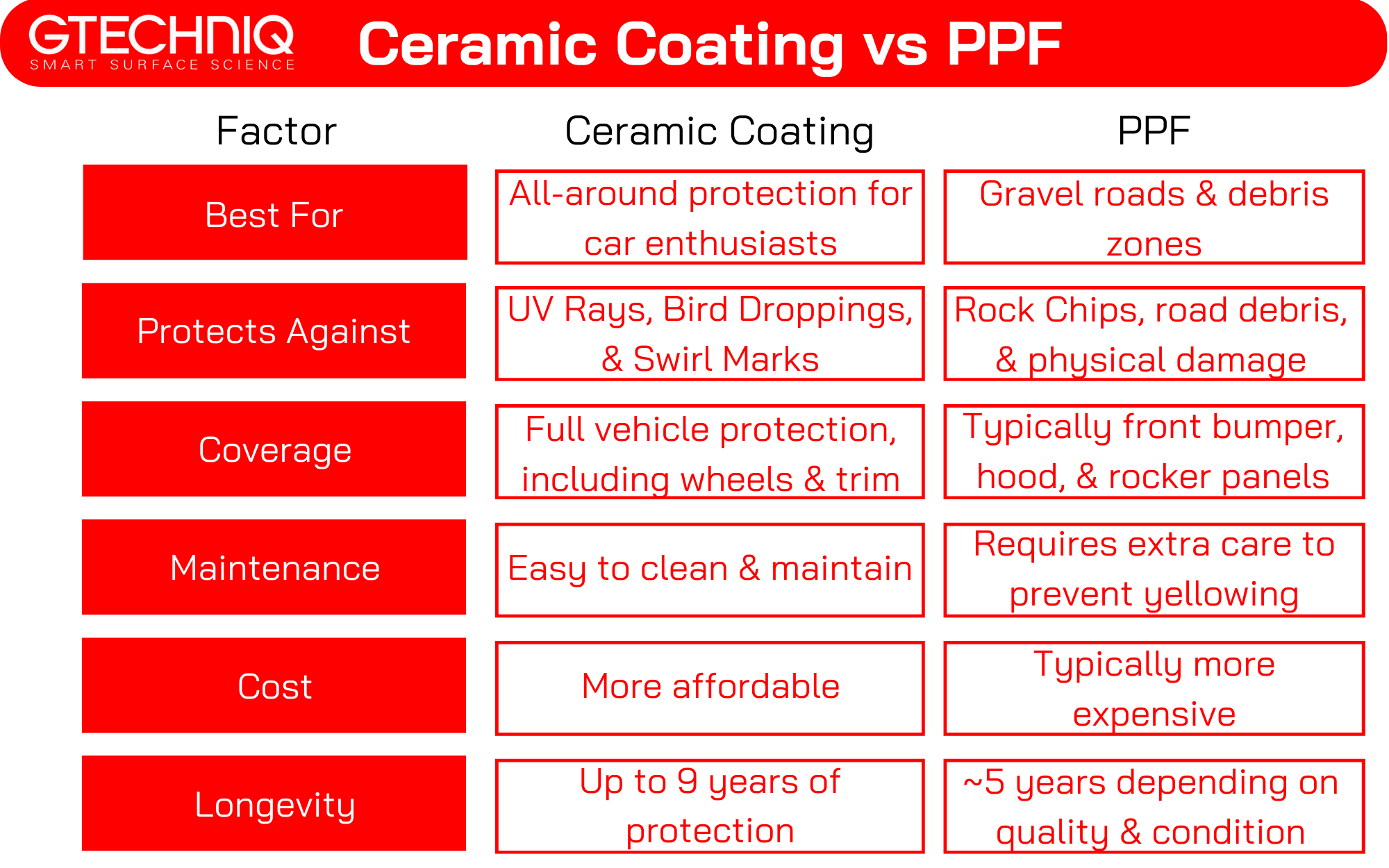
Choosing between ceramic coating and PPF comes down to your driving conditions, budget, and protection priorities. Here’s a quick comparison to help:
The Bottom Line
For most vehicle owners, ceramic coating offers the ideal balance of protection, value, and ease of maintenance. It guards against the everyday threats your paint actually faces while keeping your vehicle looking its best with minimal effort.
If you regularly encounter rock chips or want targeted protection for high-impact areas, combining PPF with ceramic coating gives you maximum protection.
Ready to protect your vehicle? Explore Gtechniq’s range of ceramic coatings or find an accredited detailer near you to get started.