

The Short Answer: Washing your car in the winter is important to protect its paint and undercarriage from road salt, grime, and freezing temperatures. Be sure to use warm water, focus on key areas like the undercarriage and wheel wells, and dry your car properly to avoid water spots and freezing. Regular cleaning using the right products and techniques will prevent long-term damage and costly repairs.
While most people focus on the warmer seasons, winter brings its own set of challenges, such as road salt, grime, and freezing temperatures, that can cause significant damage to your car’s paint and undercarriage if not properly addressed. When snow, salt, and mud accumulate on your vehicle, they can cause corrosion, rust, and other costly repairs.
In this guide, we’ll walk you through the best practices for washing your car in winter, how to protect your car’s paint from harsh winter conditions, and the right products to use to maintain that fresh, clean look all season long.
Winter Challenges for Your Car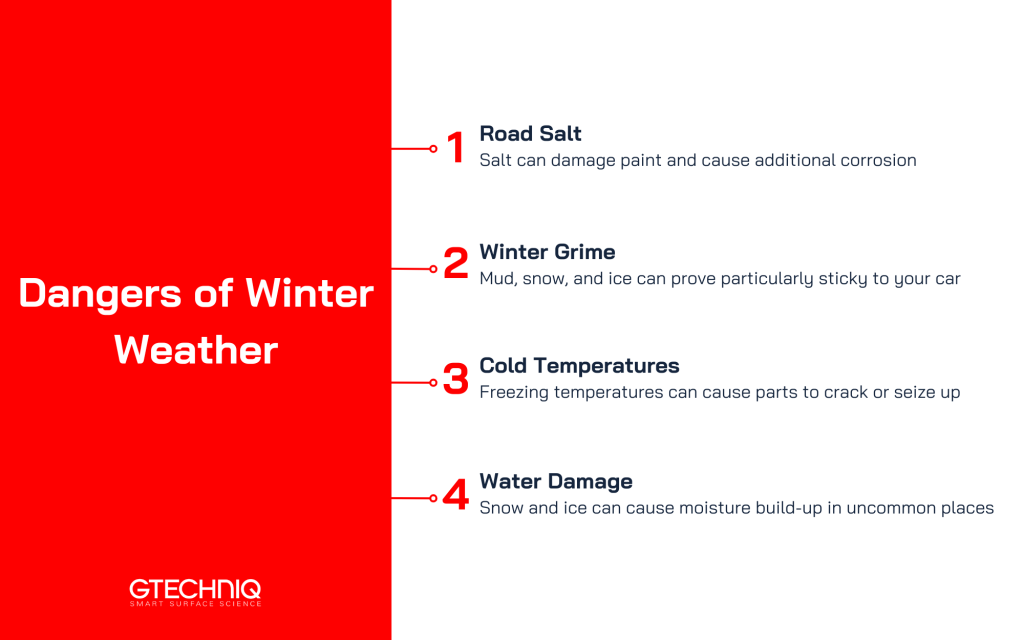

Road Salt
One of the biggest threats to your car during the winter months is road salt. While it’s essential for melting ice and improving traction, it can damage your car’s paint, undercarriage, and wheel wells. Salt can cause corrosion, leading to rust if left unchecked, and this damage can spread to vital areas of your vehicle. Regular washing helps prevent this buildup from causing permanent damage.
Winter Grime
In addition to salt, winter brings grime like mud, snow, and ice. These substances can build up on your vehicle, leading to stains and potential damage to sensitive parts like fuel lines and door seals. If left unwashed, this grime can degrade your car’s protective coatings over time. Regular cleaning removes this buildup, keeping your car protected.
Cold Temperatures
Washing your car in winter comes with its own set of challenges due to freezing temperatures. When the temperature dips below freezing, water can quickly freeze on your vehicle, causing parts to seize up or crack. Water can freeze in door handles and wiper blades, making it difficult to open doors or use the car. If water freezes in the undercarriage, it can cause long-term damage to vital components.
Water Damage
In winter, snow and ice present another challenge: water damage. Snow can accumulate in crevices like door seals and body panels, freezing overnight and causing moisture buildup. This moisture can lead to rust or damage sensitive electronics, especially around the battery and undercarriage. Keeping your vehicle clean and dry is essential to prevent this kind of damage.
Best Practices for Washing Your Car in Winter
Preparation for Winter Wash
Before washing your car in the winter, it’s crucial to prepare both your vehicle and your workspace. Ideally, wash your car when the outside temperature is above freezing, and if possible, use a heated garage to make the process easier and reduce the chances of freezing water. Make sure your vehicle is free of snow and ice buildup, especially around door seals, wiper blades, and fuel lines, as these areas are more susceptible to moisture damage. Also, be sure to protect sensitive parts, like the electrical connections and battery compartment, by covering them with plastic or tape.
Step-by-Step Winter Wash

1. Pre-Rinse
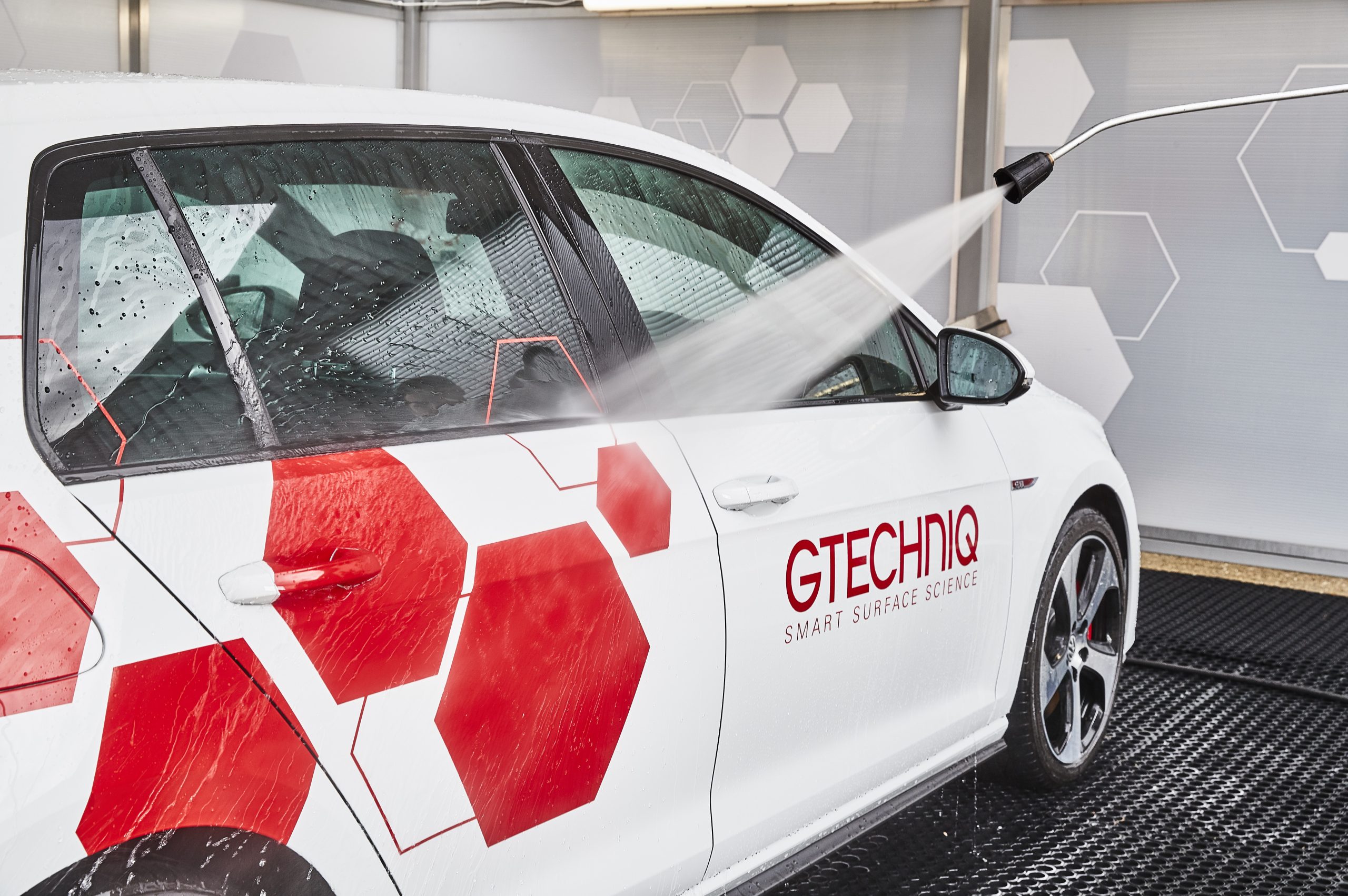
Start by gently rinsing off loose snow, ice, and road salt. Use clean water to avoid forcing grime into hard-to-reach areas. If you’re using a hose, make sure the pressure is low to avoid damaging seals.
2. Wash the Body
For the safest wash, use the bucket method with a pH-balanced car wash solution. This helps avoid harsh chemicals that can damage your paint. If you’re using a touchless wash, be sure it’s low-pressure to prevent moisture from entering sensitive areas like the engine bay or undercarriage.
3. Focus on the Undercarriage & Wheel Wells
Road salt and grime often accumulate in the undercarriage and wheel wells, where they can cause corrosion. Use a hose with a low-pressure spray or a special undercarriage wash to remove salt buildup from these areas.
4. Rinse and Dry
Rinse the vehicle thoroughly to remove all soap and grime. Dry the car with a clean microfiber towel, taking care to avoid leaving moisture around door seals and other vulnerable areas. Don’t dry the car in direct sunlight, as this can cause water spots.
5. Post-Wash Care
After washing, inspect your car for any remaining grime or water droplets in hidden areas. Apply a layer of ceramic coating or protective spray to the paint to shield it from future grime and road salt buildup. It also helps keep your car looking shiny despite winter conditions. Always ensure that all electrical connections are completely dry before reassembling any parts.
Products & Tools for Effective Winter Car Washing
Winter-Specific Car Wash Solutions
When washing your car in the winter, it’s important to use the right cleaning products to protect your car’s finish and avoid damage. Gtechniq offers specialized car wash solutions, like G-Wash and Multi Purpose Cleaner, which are designed to remove dirt, road salt, and grime without harming your car’s paint or protective coatings.
These solutions are pH-balanced, ensuring they won’t strip away essential waxes or sealants that help protect your car from the harsh winter elements. Be sure to choose products that are safe for winter conditions, as using harsh chemicals can damage your paint and finish.
The Essential Tools
The right tools can make all the difference when washing your car in winter. Here are a few essential tools to consider:
- Microfiber Towels: These are gentle on your car’s surface and help prevent scratches while drying your vehicle.
- Soft Wash Mitts: Use a soft mitt or brush to scrub away grime, snow, and road salt. This helps avoid scratches while ensuring a deep clean.
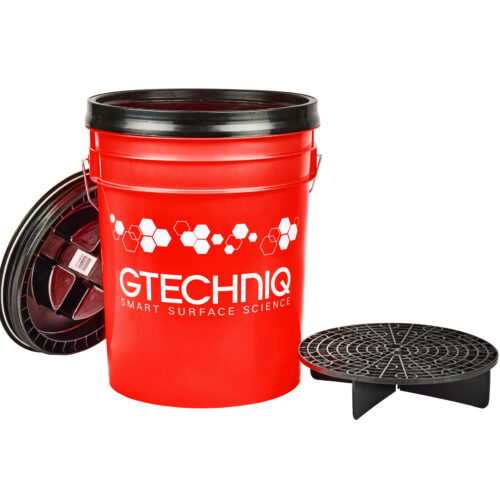
- Wash Buckets: One bucket holds your soapy water, while the other is for rinsing your wash mitt to ensure you’re not reapplying dirt to your car’s surface.
Protective Coatings & Aftercare Products
After a thorough wash, apply a ceramic coating or protective spray to your car’s paint. Products like C2 Liquid Crystal provide a protective layer against road salt, grime, and other winter contaminants. These coatings help maintain your car’s finish and make it easier to clean next time. Protective coatings can also enhance the durability of your car’s surface, keeping it looking new longer by repelling dirt and moisture.
Keeping Your Car Protected Through Winter
Washing your car in winter is not just about keeping it clean; it’s about protecting it from the harsh conditions that winter brings. Road salt, grime, freezing temperatures, and moisture buildup can cause serious damage to your car’s paint, undercarriage, and vital components if left unchecked. By following the right winter washing techniques, using proper products, and taking extra care with drying and protective coatings, you can ensure your car stays in top condition throughout the colder months.
For the best results, trust products from Gtechniq’s car solutions, which are specifically designed to withstand winter conditions and keep your car performing at its best.