

The Short Answer: Water spots are mineral deposits left behind when water evaporates on your car’s paint or glass. Light spots can often be removed with a dedicated water spot remover like Gtechniq W9, while more stubborn water spots may require paint correction. The best long-term defense is a ceramic coating that prevents mineral deposits from bonding to the surface in the first place.
Hard water, sprinkler overspray, and acid rain can all leave behind the same problem: mineral residue that clings to your paint and clear coat. Left untreated, what starts as a small cosmetic issue can etch into the finish and cause permanent damage to your car. The good news is that most water spots are removable with the right approach and the right products. This guide covers what causes water spotting, how to remove water spots at every severity level, and how to keep them from coming back.
What Causes Water Spots on Cars?
Water spots form when water sits on your car’s surface long enough to evaporate, leaving behind whatever was dissolved in it. The type and severity of the spot depends on what’s in the water and how long it stays on the paint.
Hard Water and Mineral Deposits
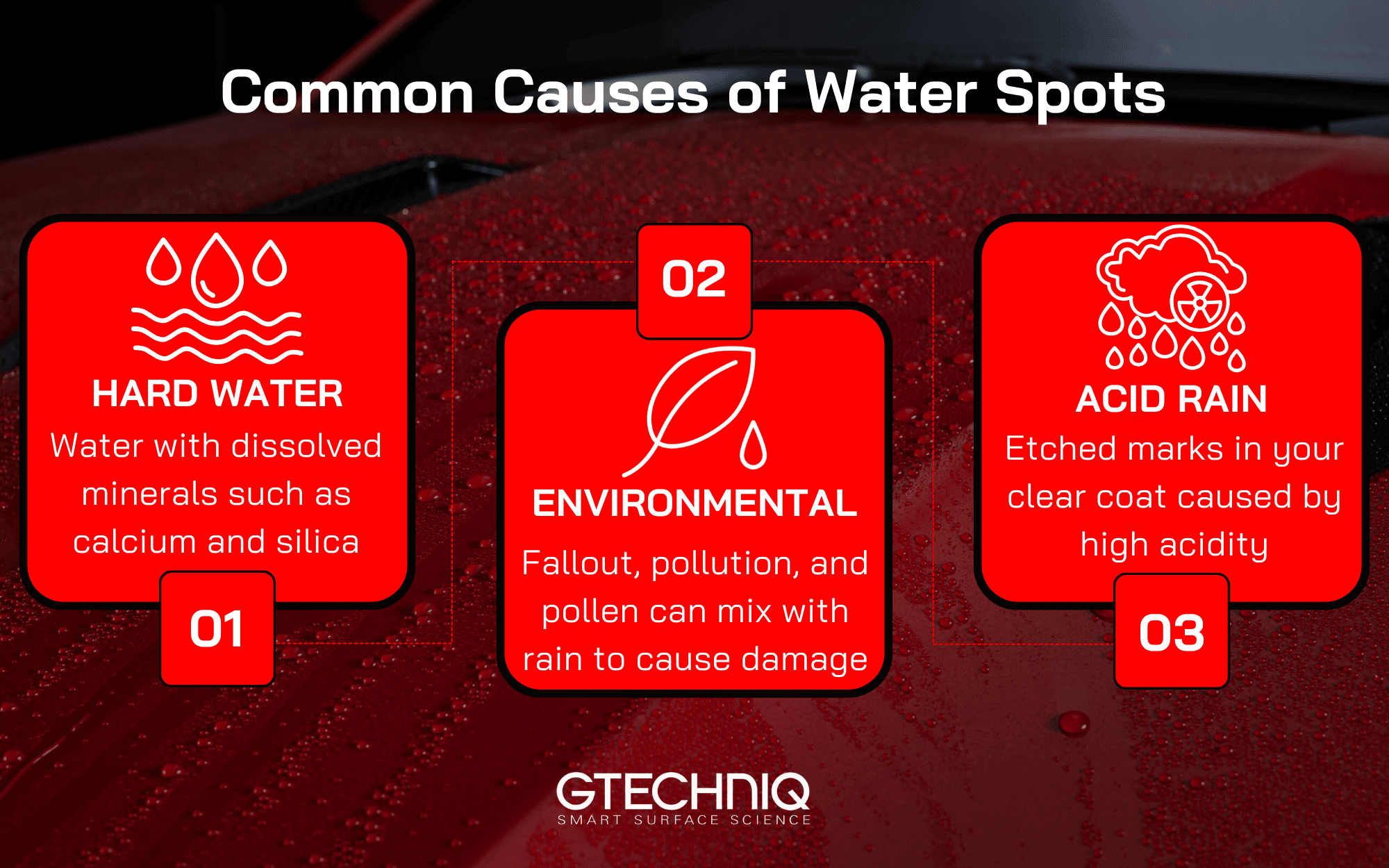
Hard water is the most common cause of water spots on cars. Tap water, garden hoses, and irrigation systems all carry dissolved minerals like calcium, magnesium, and silica. When that water lands on your paint or glass and dries in the sun, those minerals are left behind as white, chalky deposits that bond to the surface. The harder your local water supply, the more pronounced the spotting will be, and the more attention you need to pay to avoid spots.
Acid Rain and Environmental Contaminants
Acid rain creates a different type of water spot. Rather than leaving mineral deposits on top of the surface, acidic water can actually etch into the clear coat, leaving marks that sit below the surface level. Industrial fallout, pollution, and even certain types of pollen can combine with rain to make this damage worse. These etched spots are harder to remove than standard hard water stains and may require paint correction to fully address.
Why Dark Cars Show Water Spots More
A black car or any dark-colored vehicle shows water spots more visibly than lighter paint. The contrast between the white mineral residue and the dark surface makes every spot stand out, especially in direct sunlight. The dark paint also conducts more heat which can cause spots to occur faster and set harder into the clear coat
How to Remove Water Spots
The right removal method depends on how long the spots have been sitting and how deeply they’ve bonded to the surface. Start with the least aggressive approach and work your way up only if needed.
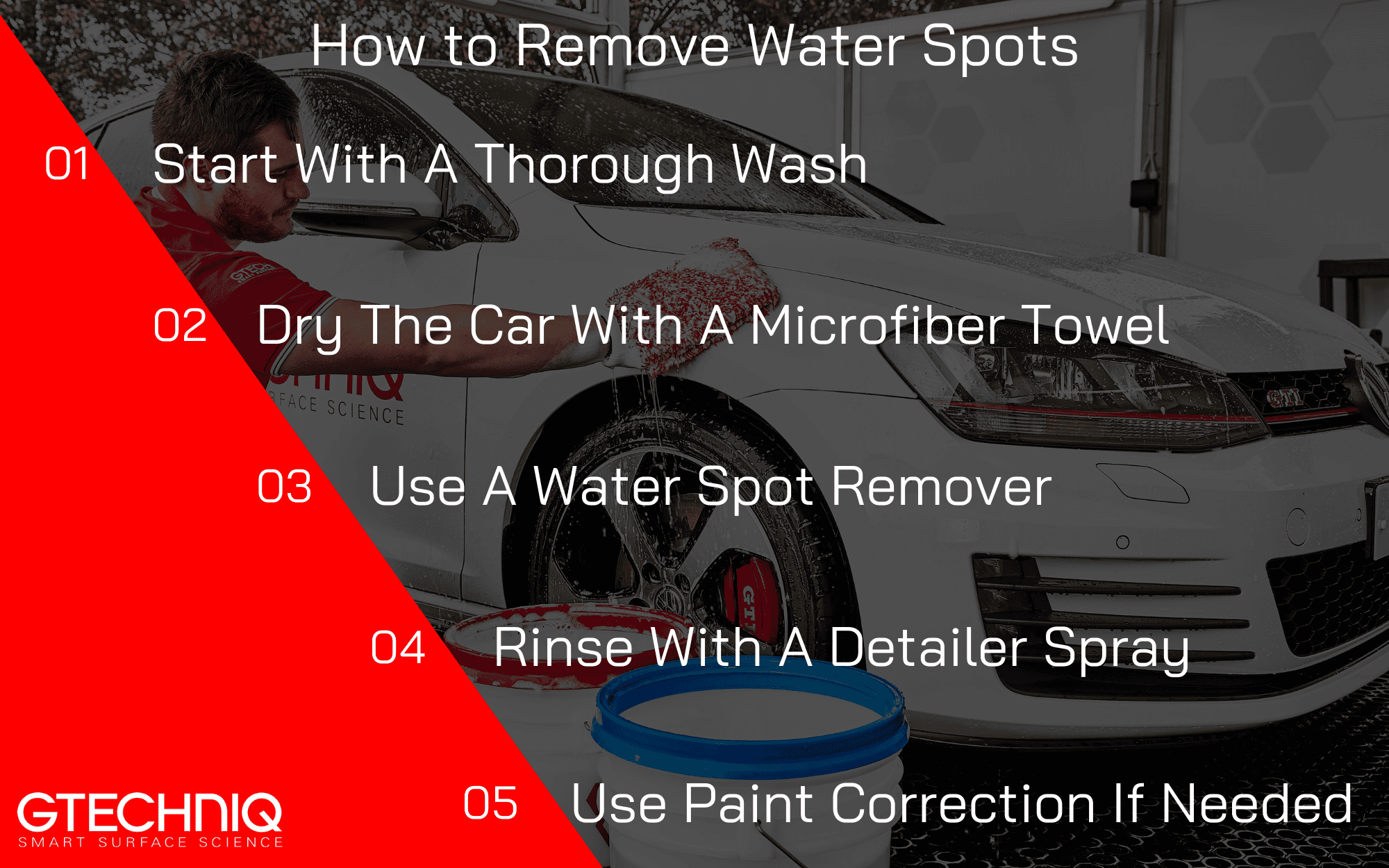
Start with a Thorough Wash
Before targeting individual spots, wash the entire vehicle with a pH-neutral car shampoo and a clean microfiber cloth or wash mitt. This removes loose dirt and surface-level contamination that could scratch the paint during spot removal. Dry the entire car with a microfiber towel immediately after washing to prevent new spots from forming while you work.
Try a Dedicated Water Spot Remover
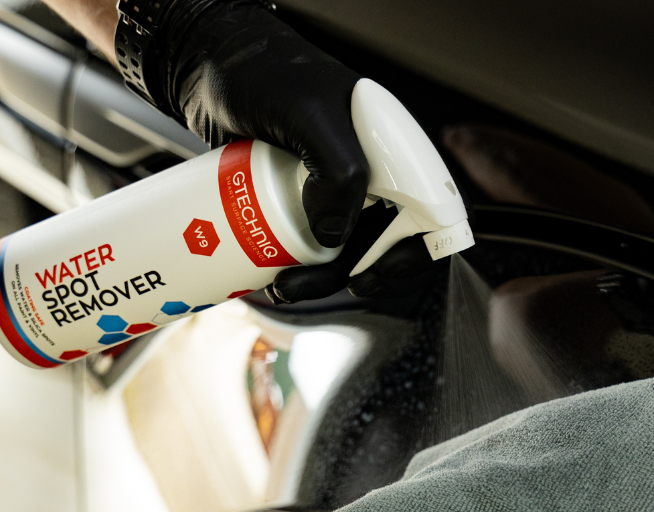
For spots that survive a standard wash, a dedicated water spot remover is the next step. Gtechniq W9 Water Spot Remover uses a three-mechanism approach: it dissolves mineral salts, traps metal ions commonly found in hard water, and breaks down silica scale, which is one of the toughest types of water stain to eliminate.
Apply W9 to a clean microfiber towel, work it into a small area no larger than 8″ x 8″, and wipe clean. Follow up with a quick detailer like Gtechniq Quick Detailer to neutralize any remaining acidity on the surface.
Pro Tip: W9 is safe for all paint types, including matte finishes and vinyl wraps, and will not damage an existing ceramic coating.
DIY Methods: White Vinegar and Other Home Solutions
A white vinegar and water solution (equal parts vinegar to water) can work on light hard water spots in a pinch. The mild acidity helps dissolve mineral deposits without the need for specialized products. Apply the mixture to a microfiber towel, work it into the affected area, and rinse thoroughly.
However, vinegar has real limitations. It won’t touch silica-based stains, and leaving it on the surface too long can dull the clear coat finish. For anything beyond light spotting, a purpose-built water spot remover will deliver better results with less risk to the paint.
Paint Correction
For spots that have etched into the clear coat, paint correction with a DA polisher and a compound like an ultimate compound is the next level. This process physically levels the clear coat to remove the etched marks.
Wet sanding is a last resort reserved for severe etching that compound alone can’t address. If you’re not experienced with paint correction, this is the stage where working with a professional detailer is worth the investment to avoid removing too much clear coat.
Water Spots on Glass
Water spots on glass can be just as stubborn as those on paint, and standard glass cleaner typically won’t remove them. The mineral deposits bond to the glass surface the same way they bond to paint, requiring a dedicated approach.
Gtechniq G4 Nanotech Glass Polish is formulated with nano abrasives and citric acid to remove hard water spots, road film, and mineral buildup from automotive glass. Apply with a hand polish pad using circular motions, then wipe clean with a damp microfiber towel. Avoid paper towels, which can leave micro-scratches on the glass surface.
W9 can also be used on glass prior to abrasive polishing with G4. Just be sure not to let the W9 dry on the glass.
Pro Tip: After polishing, applying a hydrophobic glass coating like Gtechniq G1 ClearVision Smart Glass helps prevent future water spotting by causing water to bead and roll off rather than sit and dry on the surface.
How to Prevent Water Spots from Coming Back
Removing water spots is only half the job. Without changes to how you wash, dry, and protect your car, the same spots will keep showing up.
Drying Technique and Final Rinse Tips
Most water spots form during the drying stage, not while driving. A few simple habits make a big difference:
- Dry the entire vehicle immediately after washing with a clean microfiber towel rather than letting it air dry
- Use a final rinse with distilled or filtered water if your tap water is particularly hard
- Avoid washing in direct sunlight or on hot panels, as water evaporates faster than you can dry it
- Reposition or cover your vehicle if it’s parked near an irrigation system or sprinkler zone
Ceramic Coatings as Long-Term Protection
A ceramic coating is the most effective long-term defense against water spotting. Coatings like Gtechniq Crystal Serum Light and EXOv5 create a hydrophobic, chemically resistant layer that prevents mineral deposits from bonding directly to the paint. Water beads and rolls off the surface instead of sitting and evaporating, which significantly reduces spot formation.
Even when spots do land on a coated surface, they sit on top of the coating rather than etching into the clear coat, making them far easier to remove.
Maintenance Between Washes
Between full washes, a detail spray or ceramic booster helps maintain the hydrophobic properties that keep water from clinging to the surface. Here’s how Gtechniq’s maintenance and protection products compare:
| Product | Type | Protection Duration | Best For |
| Quick Detailer | Detail spray | Between washes | Light dust, fingerprints, early-stage water spots |
| C2 Liquid Crystal | Ceramic sealant | Up to 6 months | UV defense, sealant-level protection in one step |
| EXOv5 | Hydrophobic coating | Up to 2 years | Intense water beading, layering over Crystal Serum Light |
| Crystal Serum Light | Ceramic coating | Up to 5 years | Full paint protection, chemical and scratch resistance |
Consistent maintenance keeps the coating performing at its peak and reduces how often you’ll need to deal with water spot removal in the first place.
Keep Your Paint Spot-Free
Water spots are one of the most common paint issues car owners deal with, but they don’t have to be a recurring problem. Start with the least aggressive removal method and work up as needed, from a thorough wash to a dedicated water spot remover like Gtechniq W9, and only move to a clay bar or paint correction if the spots have etched into the clear coat.
Prevention is where the real value lies. A ceramic coating like Crystal Serum Light or EXOv5 keeps mineral deposits from bonding to the surface, and routine maintenance with Quick Detailer or C2 Liquid Crystal extends that protection between washes. The result is a finish that stays cleaner longer and makes water spot removal far less frequent.
Ready to stop chasing water spots? Explore Gtechniq’s full line of automotive care products or find an accredited detailer near you.